


Semax
£14.99
Available on backorder
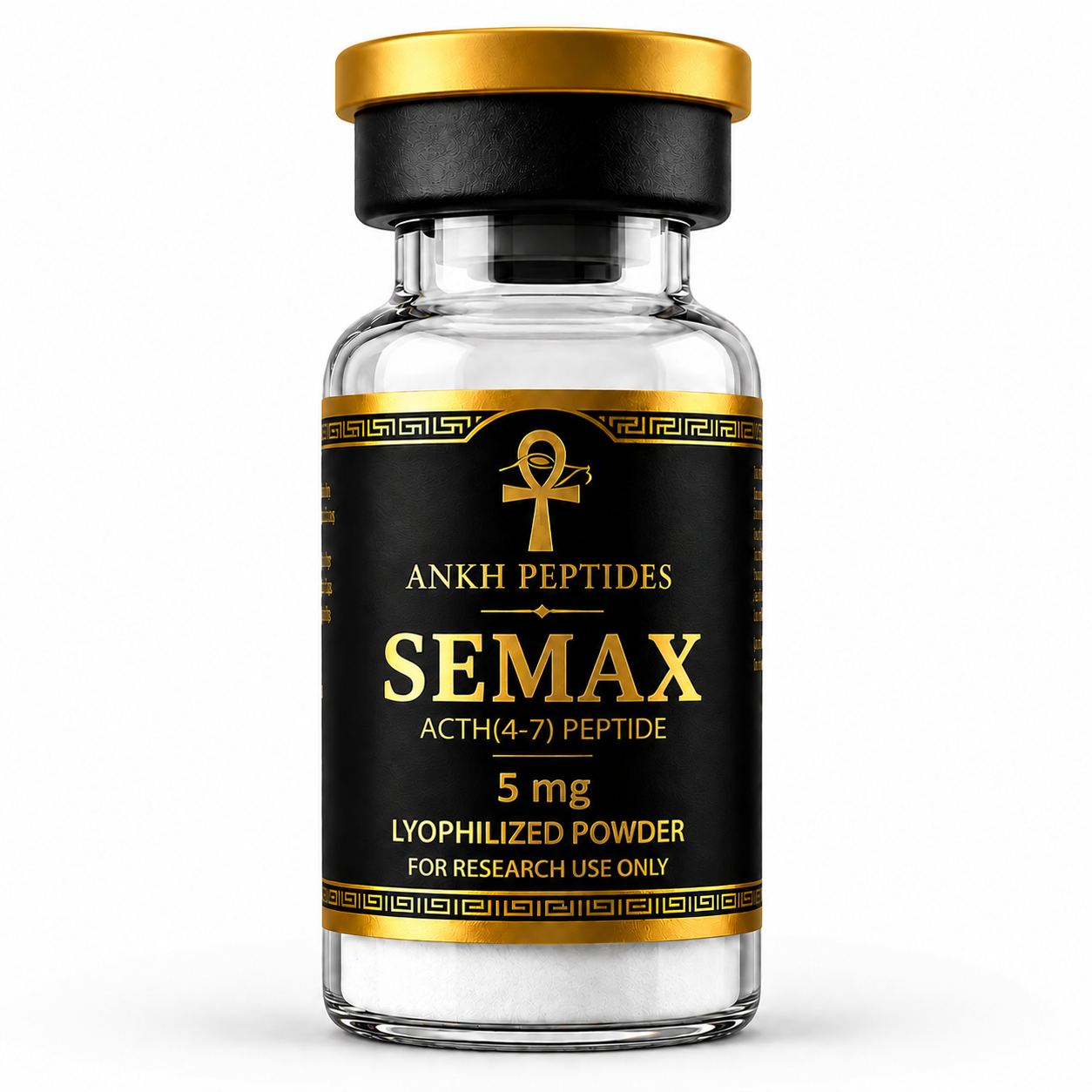
Semax is a synthetic heptapeptide analog of a fragment of adrenocorticotropic hormone ($\text{ACTH}_{4-10}$). Developed as a reference compound for investigating neuroprotective and cognitive mechanisms, Semax operates as a primary regulatory agent in central nervous system models. Structurally stabilized with a Pro-Gly-Pro C-terminus to resist enzymatic degradation, this peptide is extensively utilized in laboratory research to study neurotransmitter modulation, neurotrophin expression, and cellular resilience under metabolic or hypoxic stress.
Mechanics of Action
Semax serves as a potent biochemical tool for mapping neurological pathways, demonstrating distinct actions across several validated research fields:
-
Neurotrophin Expression (BDNF & NGF): Triggers a rapid, sustained upregulation in the transcription of Brain-Derived Neurotrophic Factor (BDNF) and Nerve Growth Factor (NGF) within hippocampal and cortical cellular models, serving as a primary model for neuroplasticity and synaptic formation studies.
-
Neurotransmitter Systems: Modulates the balance of dopamine and serotonin pathways while inhibiting the enzymatic breakdown of enkephalins. This allows researchers to observe shifts in cellular processing speed, focus markers, and stress tolerance without traditional central nervous system exhaustion.
-
Antihypoxic & Cellular Defense: Extensively utilized to observe cellular preservation during periods of oxygen deprivation (hypoxia) or ischemic insult, successfully demonstrating a reduction in inflammatory cytokine cascades and the preservation of cellular ATP.
-
Genomic Shifting: Alters the transcription profiles of genes governing vascular function and immune responses within nervous tissue, establishing a highly stable environment for cellular longevity assays.
Key Research Applications
-
The Cognitive Architect: While structural peptides focus on peripheral tissue remodeling, Semax is the definitive reference standard for researching central nervous system longevity, executive function, and mental endurance pathways.
-
Neuroplasticity & Synaptic Mapping: Heavily investigated in models examining accelerated learning curves, long-term memory consolidation, and neurochemical stability under external stressors.
-
Neurodegeneration & Injury Models: Widely deployed in laboratory simulations of ischemic stroke, traumatic brain injury (TBI), and accelerated cognitive decline to analyze mechanisms of neurological rehabilitation and tissue preservation.
-
Stress Adaptability Matrices: Utilized in research exploring the mitigation of cellular fatigue, burnout, and emotional dysregulation by balancing the neurochemical response to acute stressors.
⚠ Safety & Compliance Notice
For Research Use Only (RUO). This product is a synthesized laboratory reagent intended strictly for in-vitro and laboratory research applications. It is not a licensed medicine, medical device, or food supplement under UK law. It is strictly not intended for human or veterinary use, consumption, injection, or clinical application. All research must be conducted in accordance with local laboratory safety standards and COSHH regulations.