
GHK-CU
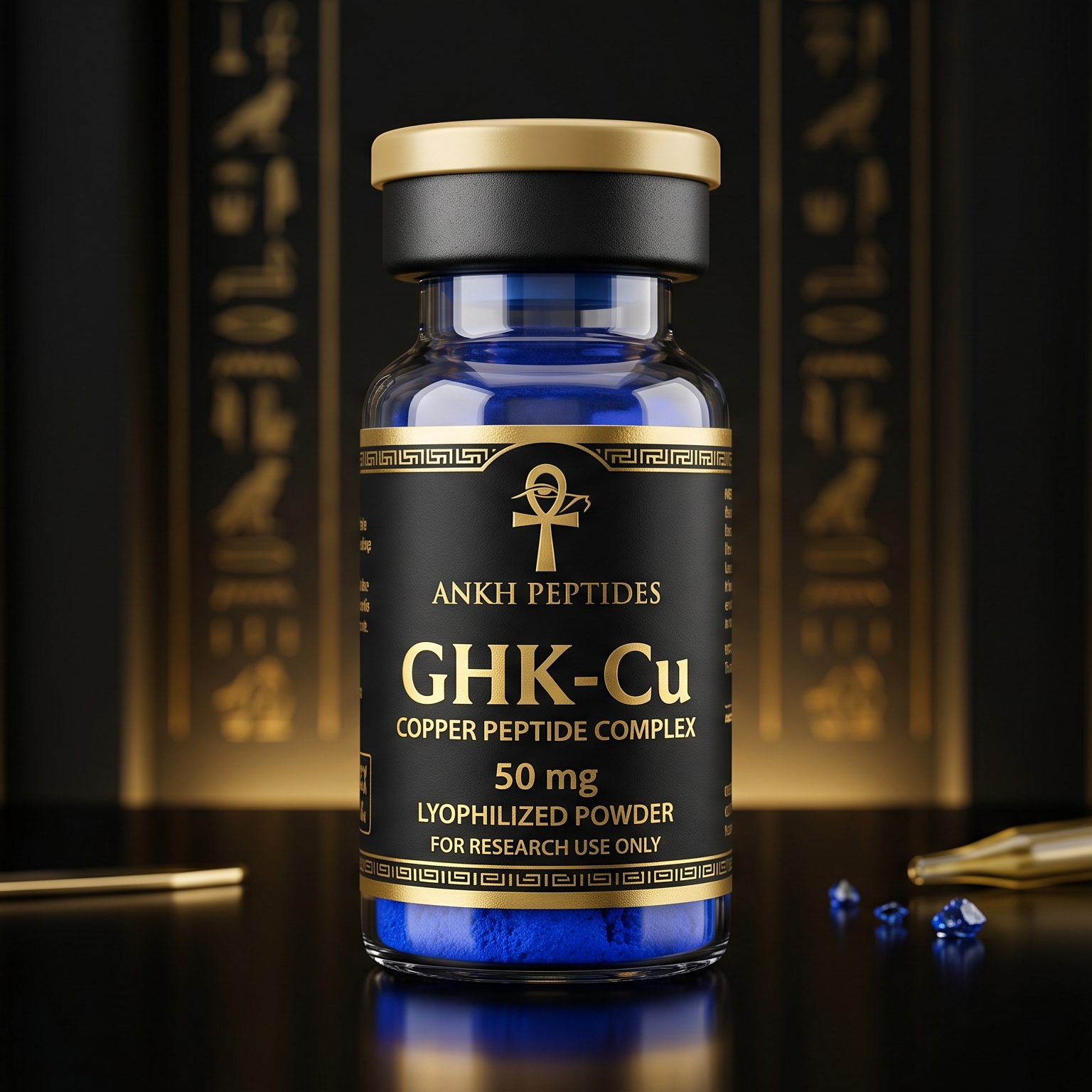
GHK-Cu (Glycyl-L-Histidyl-L-Lysine Copper) is a naturally occurring, high-affinity tripeptide-copper complex found in human plasma. Renowned as a master regulator of tissue remodeling and cellular regeneration, GHK-Cu operates at a deep genomic level to downregulate inflammatory pathways, stimulate extracellular matrix production, and promote rapid, high-fidelity cellular repair.
Mechanics of Action
GHK-Cu serves as a natural carrier system, safely delivering trace Copper (II) ions directly to intracellular enzymes. Its regenerative impact centers on several key bio-pathways:
-
Extracellular Matrix (ECM) Synthesis: Directly upregulates the transcription of genes responsible for producing Collagen Type I, III, and IV, as well as elastin, proteoglycans, and glycosaminoglycans.
-
Fibroblast & Endothelial Stimulation: Promotes the proliferation of fibroblasts (the cells responsible for structural integrity) and upregulates VEGF (Vascular Endothelial Growth Factor) to support healthy microcirculation and angiogenesis (new blood vessel formation).
-
Stem Cell Vitality: Studies show GHK-Cu helps maintain the proliferative potential of basal stem cells, effectively resetting damaged or aging cellular structures to a more resilient phenotype.
Key Research Applications
The Structural Architect: While metabolic peptides like Retatrutide optimize systemic energy expenditure, GHK-Cu targets the physical architecture of tissue, making it the definitive reference standard for cellular longevity and remodeling research.
-
Tissue Regeneration & Wound Healing: Extensively studied for its ability to accelerate dermal repair, minimize scar tissue formation, and support intact tissue restructuring.
-
Anti-Aging & Dermal Density: Investigated for its potent ability to improve skin elasticity, reduce fine lines, increase look of skin thickness, and modulate hyperpigmentation.
-
Follicular & Hair Research: Heavily utilized in models examining hair follicle enlargement, vascular support to the scalp, and the mitigation of follicle miniaturization.
Be the first to review “GHK-CU”
Related products
Cellular Repair & Anti-Aging
Reviews
There are no reviews yet.